

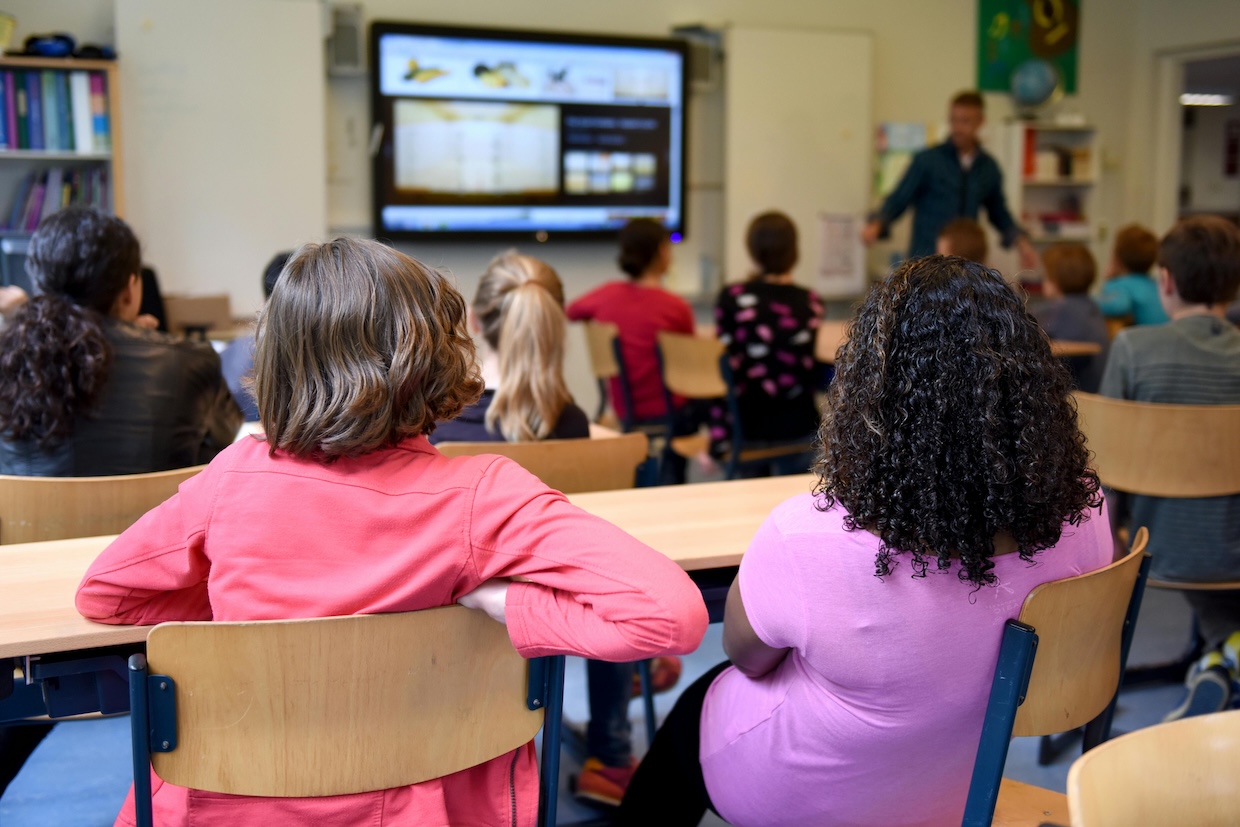
Choosing a school in the Netherlands is an important decision, as the local education system can differ significantly from what many families are used to. Here are several key aspects that parents should clarify in advance.
1. Exam system and workloadIt is important to understand not only whether the school has tests, but also how they are scheduled. Find out how often exams take place and when exactly they are held — before holidays or immediately after them. This can significantly affect a child’s workload and stress level during school breaks.
1. Exam system and workloadIt is important to understand not only whether the school has tests, but also how they are scheduled. Find out how often exams take place and when exactly they are held — before holidays or immediately after them. This can significantly affect a child’s workload and stress level during school breaks.
2. Learning foreign languages
Make sure to learn how new languages are introduced. Do students start two languages in the first year, or are they added gradually?
This is especially important for gymnasium-level education, where students may study several languages besides Dutch and English — such as French, German or Spanish, as well as Latin and Greek. In some cases, a student may end up learning up to six languages at the same time.
3. Cancelled lessons and school discipline
Часто забываемый, но важный пункт: что делает ребенок, если урок отменили? Может ли он уйти домой или обязан находиться в школе до конца учебного дня?
4. Transition classes (brugklas)Ask how long the transition class (brugklas) lasts. In some schools it takes one year, while in others it may last two.For many children, this period becomes decisive for determining their final educational track.
Make sure to learn how new languages are introduced. Do students start two languages in the first year, or are they added gradually?
This is especially important for gymnasium-level education, where students may study several languages besides Dutch and English — such as French, German or Spanish, as well as Latin and Greek. In some cases, a student may end up learning up to six languages at the same time.
3. Cancelled lessons and school discipline
Часто забываемый, но важный пункт: что делает ребенок, если урок отменили? Может ли он уйти домой или обязан находиться в школе до конца учебного дня?
4. Transition classes (brugklas)Ask how long the transition class (brugklas) lasts. In some schools it takes one year, while in others it may last two.For many children, this period becomes decisive for determining their final educational track.

5. Teacher involvement and student independence— HAVO: if a child needs more guidance and supervision from teachers, this track is often more comfortable. After completing HAVO (5 years), it is possible to continue for two additional years to reach the VWO level.
— VWO: the approach here is closer to university-style learning. Teachers deliver the lesson and expect students to work independently.
— personal qualities: academic ability alone is not enough. By the age of 12, students are expected to demonstrate persistence, independence, and an understanding of their learning goals.
6. Type of recommendation (advies)
Be sure to ask whether the school accepts combined recommendations (for example, havo/vwo) or if they require a strictly defined level.
7. Analysing statistics and resultsIf you still have questions, you can use the website scholenopdekaart.nl. Check the sections “het onderwijs” (education) and “resultaten” (results). These statistics show how students progress after 2–3 years of study — how many confirm their recommended level and how many were placed too high or too low.
— VWO: the approach here is closer to university-style learning. Teachers deliver the lesson and expect students to work independently.
— personal qualities: academic ability alone is not enough. By the age of 12, students are expected to demonstrate persistence, independence, and an understanding of their learning goals.
6. Type of recommendation (advies)
Be sure to ask whether the school accepts combined recommendations (for example, havo/vwo) or if they require a strictly defined level.
7. Analysing statistics and resultsIf you still have questions, you can use the website scholenopdekaart.nl. Check the sections “het onderwijs” (education) and “resultaten” (results). These statistics show how students progress after 2–3 years of study — how many confirm their recommended level and how many were placed too high or too low.
.png)