

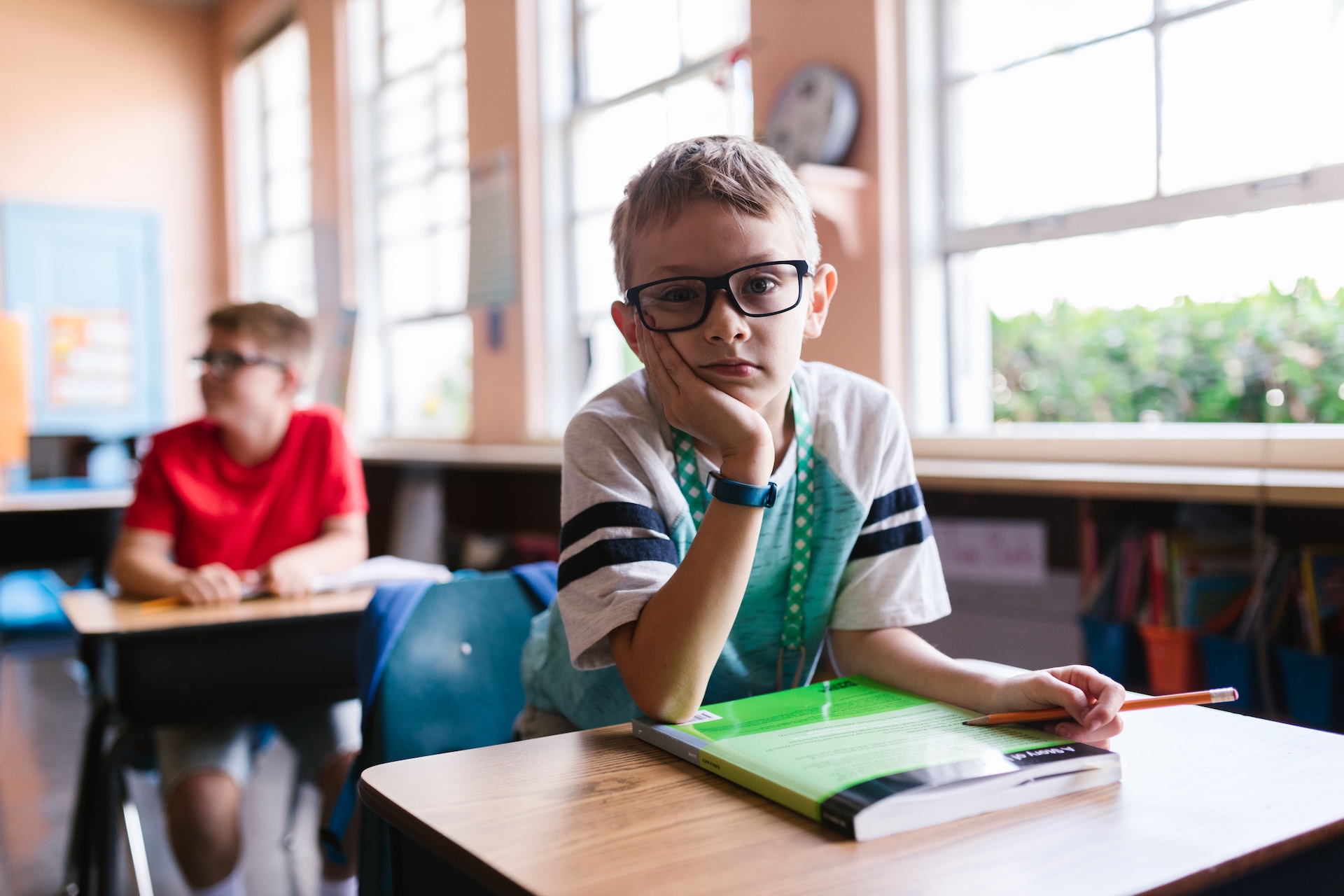
Almost every parent has heard this phrase at least once. The first thought is often that the child is being lazy or simply does not want to learn.In reality, “I’m bored” can mean many different things. It may point to tiredness, anxiety, a lack of challenge, difficulties with classmates or a loss of interest in the learning process itself.Let us look at the most common reasons behind these words.
1. The Material Is Too Easy
Sometimes children are genuinely bored because the schoolwork is not challenging enough.
They complete their tasks quickly and then have to wait for the rest of the class. Over time, they may begin to feel that school requires little effort and is no longer interesting.
These children do not necessarily receive excellent grades. Some become distracted, talk during lessons or gradually lose their motivation altogether.
2. The Material Is Too Difficult
Sometimes the word “boring” is a safer alternative to saying:
“I don’t understand anything.”
“I’m afraid of making a mistake.”
“I feel like everyone else is better than me.”
This is particularly common among children who are studying in a second language or have recently changed schools.
Admitting that something is difficult can feel much more uncomfortable than simply saying, “I’m bored.”
3. The Brain Is Tired
Children today experience a constant flow of information and stimulation.
Lessons, homework, extracurricular activities, devices, messages and videos leave the brain with very little time to rest.When a child’s mental resources are depleted, they may describe the feeling with a single word: “boring.” In reality, what they are experiencing may be cognitive or emotional exhaustion.
4. There Is Not Enough Sense of Achievement
Interest grows when children can see that they are making progress.
When a child has not experienced the feeling of “I did it!” for a long time, their motivation may gradually decline.
Sometimes the problem is not school itself. The child may simply not be receiving manageable challenges that allow them to recognise their own growth and success.
5. Difficulties with Classmates
When children feel lonely, excluded or uncomfortable within their class, they may say that school is boring even though the real reason has little to do with the lessons.
Questions about schoolwork alone may not reveal the problem. It is also important to ask how the child feels during breaks, group activities and informal moments with classmates.
6. Learning Has Lost Its Meaning
Many children do not understand why they need to study a particular subject.
When education becomes focused only on grades, tests and correct answers, internal motivation gradually disappears.
Learning becomes easier and more engaging when children can connect knowledge to real life. They need opportunities to apply what they learn, discuss ideas, ask questions and search for answers independently.
7. There Is Not Enough Space for Curiosity
Curiosity does not simply disappear on its own. It fades when there is never enough time for questions, when finding the correct answer matters more than exploring the subject and when mistakes are treated as failures.
Interest often returns when children are allowed to investigate, discuss, experiment and make mistakes without fear.
What Parents Can Do
Start by trying to understand what your child means when they use the word “boring.”
Instead of asking, “Why are you bored?” try asking:
— At what point today did you start feeling bored?
— What would you have liked to do differently?
— Are there any lessons that you enjoy?
— What was the most interesting part of your day, even if it was something very small?
These questions make it easier to have a deeper conversation and can help uncover the real reason behind the child’s feelings.
When to Look for Additional Support
Consider looking for additional support when the feeling of boredom continues for several months, the child increasingly refuses to do homework, loses interest in reading or begins to believe that they are not capable of learning.
In this situation, it may be helpful to explore educational opportunities outside the regular school environment. A different format, a smaller group, practical activities or lessons in a familiar language can help a child experience learning in a new way.
Ultimately, the purpose of education is not simply to achieve good grades. It is to preserve a child’s desire to keep learning.That desire is one of the strongest foundations for future success.
1. The Material Is Too Easy
Sometimes children are genuinely bored because the schoolwork is not challenging enough.
They complete their tasks quickly and then have to wait for the rest of the class. Over time, they may begin to feel that school requires little effort and is no longer interesting.
These children do not necessarily receive excellent grades. Some become distracted, talk during lessons or gradually lose their motivation altogether.
2. The Material Is Too Difficult
Sometimes the word “boring” is a safer alternative to saying:
“I don’t understand anything.”
“I’m afraid of making a mistake.”
“I feel like everyone else is better than me.”
This is particularly common among children who are studying in a second language or have recently changed schools.
Admitting that something is difficult can feel much more uncomfortable than simply saying, “I’m bored.”
3. The Brain Is Tired
Children today experience a constant flow of information and stimulation.
Lessons, homework, extracurricular activities, devices, messages and videos leave the brain with very little time to rest.When a child’s mental resources are depleted, they may describe the feeling with a single word: “boring.” In reality, what they are experiencing may be cognitive or emotional exhaustion.
4. There Is Not Enough Sense of Achievement
Interest grows when children can see that they are making progress.
When a child has not experienced the feeling of “I did it!” for a long time, their motivation may gradually decline.
Sometimes the problem is not school itself. The child may simply not be receiving manageable challenges that allow them to recognise their own growth and success.
5. Difficulties with Classmates
When children feel lonely, excluded or uncomfortable within their class, they may say that school is boring even though the real reason has little to do with the lessons.
Questions about schoolwork alone may not reveal the problem. It is also important to ask how the child feels during breaks, group activities and informal moments with classmates.
6. Learning Has Lost Its Meaning
Many children do not understand why they need to study a particular subject.
When education becomes focused only on grades, tests and correct answers, internal motivation gradually disappears.
Learning becomes easier and more engaging when children can connect knowledge to real life. They need opportunities to apply what they learn, discuss ideas, ask questions and search for answers independently.
7. There Is Not Enough Space for Curiosity
Curiosity does not simply disappear on its own. It fades when there is never enough time for questions, when finding the correct answer matters more than exploring the subject and when mistakes are treated as failures.
Interest often returns when children are allowed to investigate, discuss, experiment and make mistakes without fear.
What Parents Can Do
Start by trying to understand what your child means when they use the word “boring.”
Instead of asking, “Why are you bored?” try asking:
— At what point today did you start feeling bored?
— What would you have liked to do differently?
— Are there any lessons that you enjoy?
— What was the most interesting part of your day, even if it was something very small?
These questions make it easier to have a deeper conversation and can help uncover the real reason behind the child’s feelings.
When to Look for Additional Support
Consider looking for additional support when the feeling of boredom continues for several months, the child increasingly refuses to do homework, loses interest in reading or begins to believe that they are not capable of learning.
In this situation, it may be helpful to explore educational opportunities outside the regular school environment. A different format, a smaller group, practical activities or lessons in a familiar language can help a child experience learning in a new way.
Ultimately, the purpose of education is not simply to achieve good grades. It is to preserve a child’s desire to keep learning.That desire is one of the strongest foundations for future success.
.png)